Wrong kind of stars
From Paul Sutherland: Death of the London Planetarium.
File Under: London Planetarium.
Reading boyruageek this morning I stumbled on Matt's Toot, Toot! posting. Seems his weblog has been listed over on the Sky & Telescope website. "Neat", I thought, "he deserves it too".
And then I started to read the list and realised that pretty much every astronomy 'blog I read is listed there: Kaustav, Rob, Megan, Ian, the BA, Vern, Stuart, James plus others (sorry, that's a list in no order and it isn't exhaustive — apologies to anyone I didn't name). "Really Neat", I thought.
And then I noticed I was listed too. "Eeek!", I thought.
It's nice that I've had a mention on the site of my favorite astronomy magazine, and it's really nice to be listed in such great company.
File Under: Astronomy Blogs, Sky & Telescope.
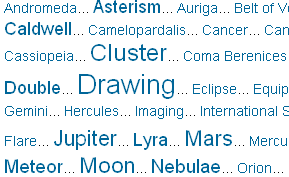 I've been meaning to have a go at this for a while now and, last night, I finally cracked. I've added a page to my astronomy site which displays my log category list as a form of tag cloud.
For those who don't know what a tag cloud is (is there anyone left who doesn't?), the idea is that you display a list of tags (or, in my case, log categories) — normally in alphabetical order — and set the font for each tag depending on how often it occurs.
While I did it more for fun than anything else it actually does seem to be an interesting way of looking at my observing logs. This, more than anything, gives me an instant feel for what sort of things I observe (or what sort of things I do while observing) the most.
Update: The cloud is no longer created from log category list. I've now changed things so that it creates the list of tags from the category list and a bunch of other markup items I have in the source XML files for the logs.
File Under: Astronomy Logs, Tag Cloud.
Chris Lintott has a nice link to some images of Orion taken from Mars.
File Under: Chris Lintott, Orion, Mars.
I've voted for the Bad Astronomer. Have you?
File Under: Bad Astronomy, Bad Astronomer, Bloggies.
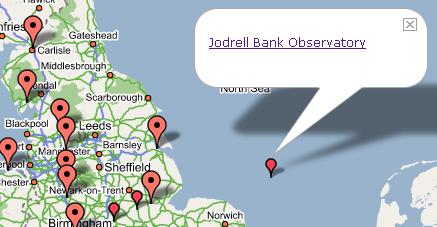
 Some time last year there was some discussion on the SPA BB about the location of various posters and how people could best make the information available to others. One poster suggested that it would be handy if there was some sort of map that people could look at. I'd been looking for a reason to play with the Google Maps API so decided to have a go. Later on that day the SPA Forum User Location Map was born.
Last night, in an idle moment, I decided to revamp it a little and one idea I had was to add the locations of various sites of astronomical interest to it (the idea being to add places that are open to visit so people using the map can see how close they are to these places of interest). Today, in spare moments, I've been looking around for places to add.
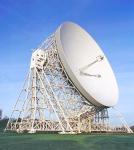
An obvious candidate was Jodrell Bank. The really nice thing about their website is that they give their location on the front page:


Here's an interesting idea that I've not seen before: the Celestron SkyScout (found via here). It seems to be a hand-held, zero power finder that tells you what you're looking at. No sign of a price at the moment; April 2006 is given as the release date.
Personally I'm a little confused about who it is aimed at. I guess the main market is the beginner but I'd have thought that the "GOTO" market is affordable enough now that most people wouldn't need something like this. I suppose the other market is the gadget-obsessed experienced amateur who just has to have cool toys.
Should be an interesting one to watch out for — I'll be keeping an eye out and having a play should I ever get my hands on one.
Update: Just noticed that this page says $400.
File Under: Celestron, SkyScout, Astronomy Gadgets.
The next time you're having one of those observing sessions where nothing seems to go right, or the light pollution is being a bit of a problem, consider this observing log entry:
...started exposure at 21h 44m GMT. Flying bomb exploded very close and shifted star in declination out of the field. Star recovered and exposure restarted at 21h 47m GMT. Just after starting the second time, a second flying bomb exploded. This was more distant and though it shifted image from the slit, star did not go out of field and was quickly recovered. Exposure ended 22h 07m GMT.From here, via this posting on the SPA BB.
Something I forgot to mention yesterday: the observing session on Wednesday saw me filling the last page of my first observing log book. It's taken me since 2005-04-16 to fill it. I'm not sure off-hand how many pages there are in it — I use a Black n' Red A5, ruled, wirebound notebook that has a "elastic closure strap" (it's the C67009 as listed here) — but there's a fair few.
I know it's kind of arbitrary but it feels like a significant milestone.
File Under: Logbooks, Milestones, Amateur Astronomy.
Finally, after been stuck in the observing doldrums for ages, I managed to get out and do some observing last night. That's a whole month since my last observing session.
The main focus of the session was Saturn — this was my first view if it in the 'scope since May of last year. I know everyone says this but you just can't get fed up of observing it. Over the course of an hour or so I had some terrible and some not-so-terrible views of it. I also spent a fair bit of time trying out various filters to see what effect they'd have.
The other highlight was viewing Saturn and M44 in the same field of view with my binocular. After having spent some time viewing Saturn in the 'scope this view somehow made Saturn appear very small and insignificant.
I've not had time to type up the log of that session yet — I'll probably get the chance in the next day or so.
Things don't look so good for tonight. Although it was clear enough for me to see the Moon when I stuck my head outside earlier there was a fair bit of mist about. Chances are it's only going to get worse by the time I'm free to do any observing.
File Under: Saturn, M44, Beehive Cluster, Praesepe.
 Knowing that sketching in astronomy is something that I'm interested in, Paul Sutherland sent me an email today pointing me at this link. It's got links to some interesting sites that deal with sketching in astronomy.
An Introduction to Planetary Drawing looks very interesting.
File Under: Astronomy, Sketching, Planets, Deep Sky Objects.
For a couple of days now some of the quotes in this article have been bothering me. First, I'll admit, until a couple of days ago I didn't have the first clue who Myleene Klass was. By coincidence, she'd turned up on an "celebrity" edition of Mastermind — I'd missed the first ½ of the programme so didn't catch what her subject was (I think she got the highest score for that section) but seem to recall that she managed to score 1 point in the general knowledge round.
Having seen that and wondering who she was I then happened to read Move Over Sir Patrick and ended up being a little wiser.
Anyway, to the quotes that bothered me. The one that really stood out was:
"If I did a space show I wouldn't want you to feel you had to run and grab a pen and pad to look up all the references later on"Why? What's so wrong with the idea of not being a passive consumer? Why the suggestion that learning is only fun if you don't do a little work yourself? In recent years, especially on the BBC, there seems to have been this trend towards entertainment over education (ask any long-time Horizon fan).
"I love the lighter side of astronomy - heavenly bodies, fly me to the moon. It doesn't always have to be heavy. Things like Doctor Who and the Daleks grab the kids."Can anyone make sense of that? Yes, Doctor Who is a fantastic programme, but what the hell does it have to do with astronomy, even the "lighter side"? Well, okay, I laughed out loud at Stuart's article about Guinevere One too, but, really...
Just received the latest copy of the SPA's magazine Popular Astronomy. In it is a write-up about the SPA convention that was held in September last year. I was delighted to see that a large part of the article comprised of the report I wrote back in September last year. Yes, it was used with my permission, but I'd mostly forgotten about it so it was fun to find myself reading it and thinking "hang on, this sounds familiar".
File Under: Society for Popular Astronomy, SPA Convention, Popular Astronomy.
It's been far too long since I last got out and observed (well, 11 days to be exact) and it's starting to annoy me now. On nights when I've got the time available it isn't clear; on nights when it's clear I'm busy with something else. It's made all the worse by the fact that I spent most of the summer looking forward to having nice long nights (and now they're starting to get shorter again) and now that they're here I'm hardly getting the chance to use them.
It's enough to make me feel quite apathetic about observing. Hopefully it'll pass. Hopefully it's one of those phases you have to get through when you get into observing for the first time (or, in my case, back into observing for the first time in about 20 years).
Still, at least I've not been totally inactive this year.
File Under: Amateur Astronomy, Observing.
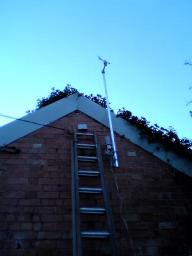 Over the weekend I finally had the time to install my new weather station. You can read about how the install went over here and you can read about my first stumbling block over here. Hopefully I'll get the latter problem sorted out one way or another pretty soon.
The nice thing about having this up and running is I can now log pressure and wind speed along with my observing logs.
File Under: Personal Weather Station, WS3600, Astronomy Observing Logs, Geek Toys.
After yesterday's play with Google's new homepage extension API I've decided to have another play. This time I've written a little module to display the latest image of the Sun as found on SpaceWeather.
It works — after a fashion. Because SpaceWeather don't provide a "today's image" image that gets updated each day I've had to write some code to construct the URL for the image for today. The main problem with this is that I'm quite a few hours ahead of the SpaceWeather people so, for part of my day, I don't have an image to view (and, of course, the same problem happens if they don't have an image for a given day).
I did have a play with some code that would try and figure out what the latest image is (by looking for an image for today, then yesterday, then the day before that, etc...) but my knowledge of javascript and all the related tools isn't that good so it's defeated me. I won't bore you with the details but it all seems to come down to security and now allowing code-based access to sites other than the host site for the code. Security's nice but, sometimes, it gets in the way.
File Under: Google Homepage, Google Homepage Developer API, Google Astronomy Hacks, SpaceWeather, Solar Image.
Google have been offering a personalised homepage facility for quite some time now and I've been using it for a few weeks. It's handy, but I've generally been disappointed with the range of items you could add to it.
Today, in the Google Blog, I noticed this article. It mentions the Google Homepage API. After a quick read of the Developer Guide I couldn't resist having a go at knocking up something astronomy related.
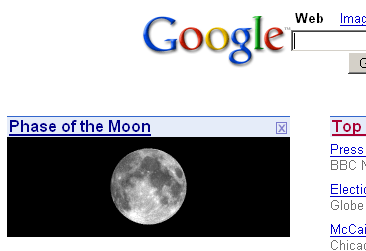
A short while later I had my own little "Hello, World!" program up and running in the form of a Phase of the Moon display. It's nothing clever, it simply makes use of the UNSO Virtual Reality Moon Phase image.
Hopefully most astronomers in the UK are now aware of the proposed Barnsley Halo project — a project that Robin Scagell of the SPA called "a monstrous act of civic vandalism".
If this post to the SPA BB is anything to go by it would appear that at least one councillor is opposed to the idea.
File Under: Barnsley Halo, Light Pollution, Robin Scagell, Society for Popular Astronomy.
It's not uncommon to find people wondering about the point and purpose of amateur observational astronomy and, as I've said before, it really comes down to what you personally make of it and take from it. Last night I had another nice little example of why I find it an exciting and rewarding interest.
Because the sky was reasonably clear (although a little misty with a threat of cloud moving in), but because the Moon was past 1st ¼, I decided to have another evening observing and getting to know the Moon using just a lunar map and a 10x50 binocular on a tripod.
Part way into the observing session I noticed what appeared to be two sunlit peaks inside the nighttime portion of the Moon, roughly south and west of the southern "headland" of Sinus Iridium. I had a good look at my lunar map and, as best as I could tell, the peaks I was seeing belonged to Mons Gruithuisen Gamma and Mons Gruithvisen Delta.
Later on, after the cloud had got the better of me and I finished the session, I decided to double check my decision using the Virtual Moon Atlas. From that Mons Gruithuisen Gamma and Mons Gruithvisen Delta did appear to be the features I'd seen. But then I read something in the information that had me doubting myself: the size of each dome is given as around 12 miles by 12 miles.
That seemed liked an awfully small feature for me to have seen with a 10x50 binocular.
This is where the fun and the reward comes in. Last night's session, rather than just being an exercise in passive observing, has now turned into a little journey driven by a desire to test my assumption that the features I'd identified are too small for me to have seen. At the moment I'm not fully sure how I'm going to answer the question but, one way or another, I'll seek out an answer.
And I'll have a lot of fun doing it.
And, if you've got an answer, please feel free to let me know. Learning from knowledgeable and experienced people is part of the fun.
File Under: Observational Astronomy, Lunar Observing.
Anyone into amateur astronomy will know what a pain the weather can be at times. It's not that weather is a "bad" thing, it's not that you can't actually enjoy watching or experiencing the weather, it's just that when you want to be out observing it's annoying when conditions don't allow it.
One option is to shake your fist at the overcast sky and go and find something else to do (build your own astronomy website, for example), another option is to actually take an active interest in the weather.
Today, I'm taking the first step towards the second option — with a geeky twist of course. I've just taken delivery of a WS3600 personal weather station. Once I've figured out how it all works, found good locations in my garden for the instruments, figured out how to interface with it from one of my computers (I'm hoping I'll be able to ignore the Windows-based software that comes with it and do something with one of my GNU/Linux boxes) and got it all up and running don't be surprised if a new section appears on one of my web sites with lots of pointless weather-related data.
File Under: Weather, Personal Weather Station, Meteorology, Geek Toys.


